

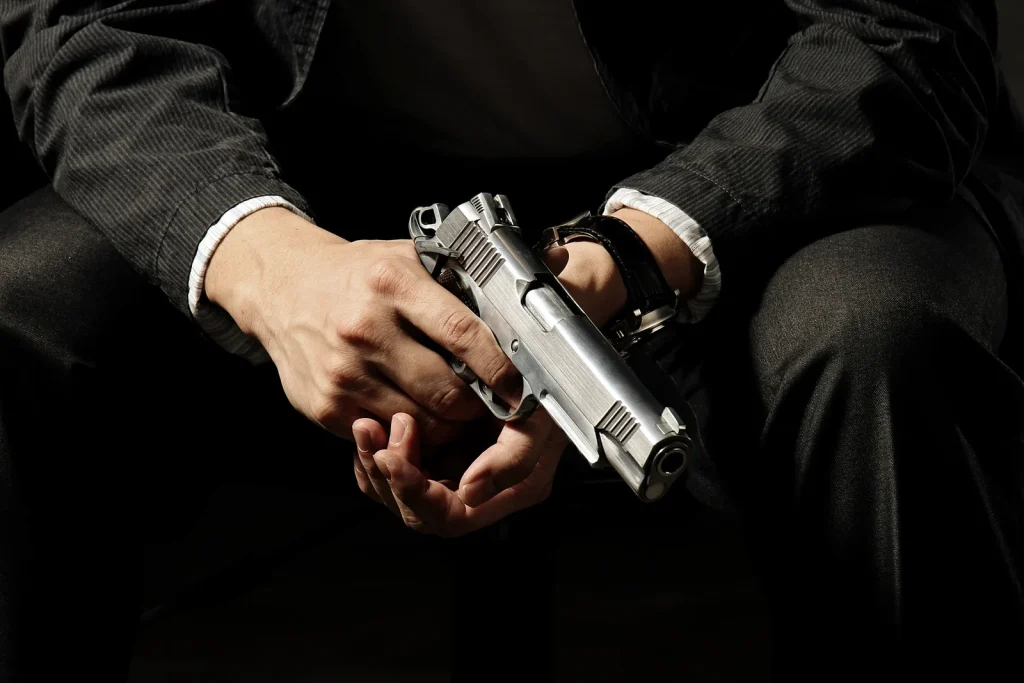
Purchasing a firearm for the first time is a decision most people make with serious intent. The motivation is real — protecting a family, securing a home, taking personal safety seriously.
What often doesn’t match that intent is the preparation that follows the purchase.
Most new gun owners make the same handful of mistakes — not out of carelessness, but out of a genuine lack of awareness that those mistakes are being made at all. That’s what makes them worth addressing directly. Understanding where the most common gaps are is the first step toward closing them before they matter in a situation where they can’t afford to remain open.
Mistake 1: Confusing Ownership With Preparedness
This is the most widespread mistake new gun owners make — and the one every other mistake flows from.
The firearm is purchased, stored in a bedside drawer or a safe, and there it sits — representing a sense of security that hasn’t actually been earned through any meaningful preparation.
Owning a firearm and being prepared to use it effectively under stress are two entirely different things. The tool does not confer capability. The training does.
Sword & Shield was built around one guiding principle: the first time you fire your weapon should never be the first time you have to fire your weapon. That principle exists because the gap between owning a firearm and being ready to use it shows up immediately and completely in a real defensive situation. There is no grace period. No opportunity to gather yourself. No substitute for the muscle memory and decision-making framework that only training builds.
New gun owners who close that gap early give themselves — and their families — something that no purchase alone can provide.
Mistake 2: Skipping Professional Instruction in Favor of Self-Teaching
The availability of online videos, range visits with friends, and well-meaning advice from other gun owners leads many new shooters to believe that formal instruction is optional. That belief is one of the more costly mistakes a new gun owner can make.
The problem with self-teaching is that it has no feedback mechanism for what you can’t see yourself doing. Grip issues, trigger anticipation, stance instability, and inconsistent sight alignment are all problems that feel invisible from the inside. You fire, the round goes somewhere, and without a qualified eye on your mechanics, you have no reliable way to know whether you’re building a strong foundation — or embedding habits that will fail you under pressure.
Sword & Shield’s one-on-one training sessions exist specifically for this. Working directly with Sal Broes or an accredited instructor means everything you’re doing is observed, identified, and corrected in real time — specific to your firearm, your body, and your actual mechanics. Bad habits formed early are significantly harder to correct later. Getting the fundamentals right from the beginning is always the more efficient path.
Mistake 3: Treating the Range as the Complete Picture
Visiting a range and firing at a stationary target in a well-lit lane is a useful starting point. It is not a complete training program.
The conditions of a standard range visit — calm, controlled, static, well-lit — share almost nothing with the conditions of a real defensive encounter. Yet many new gun owners treat consistent range visits as the entirety of their defensive preparation, assuming that accuracy under ideal conditions translates directly into capability when things are dark, dynamic, and moving fast.
Sword & Shield’s Range Day program is built around correcting exactly this assumption. Students progress from static target practice through movement drills, stress-fire scenarios, and engaging live targets with simulation guns — all within a single structured session. The experience of firing under adrenaline, while moving, against a responsive target in a time-compressed scenario is something a standard range visit simply cannot replicate.
That experience, practiced in a safe and controlled environment, is what begins to build genuine defensive readiness — rather than the appearance of it.
Mistake 4: Neglecting Low-Light Scenarios
New gun owners almost universally practice in well-lit conditions. Most ranges are well-lit by design, and daytime practice is more convenient. The problem: a significant proportion of real home defense situations unfold in low-light conditions.
Nighttime intrusions. Poorly lit hallways. Early morning hours. These are the environments where a defensive encounter is most likely to happen — and the ones most new gun owners have never once trained for.
Sword & Shield’s low-light shooting training addresses this directly. This specialized component teaches flashlight technique, threat identification in transitioning light environments, and effective shooting when visibility is severely reduced.
For any new gun owner whose firearm is primarily a home defense tool, training for the conditions in which that defense is most likely needed is not an advanced consideration. It’s a foundational one that shouldn’t be deferred.
Mistake 5: Overlooking the Home Environment Itself
A new gun owner might develop solid shooting skills and still be completely unprepared for a defensive encounter in their own home — because they’ve never thought through the specific challenges their home’s layout presents.
Where does a threat most likely enter? What are the safe lines of fire that don’t put family members in adjacent rooms at risk? Where should family members go — and does every person in the household know that?
Sword & Shield’s home security assessment answers these questions through a thorough, personalized on-site evaluation. Sal examines every entry point, every blind spot, and every vulnerability specific to your property — then develops a customized defense plan that maps your home’s layout onto realistic threat scenarios and includes one-on-one instruction for your entire household.
The people who share your home need to be part of your defensive preparation — not variables you haven’t accounted for.
Mistake 6: Leaving Children Outside the Conversation
New gun owners with children frequently treat secure storage as the complete answer to child safety around firearms. Secure storage matters — but it only governs what happens inside your own home.
Your children spend time in other homes, at relatives’ houses, and in environments where a firearm may be present and accessible without any of the safeguards you have in place at your address. Children who receive no education about how to respond to an unattended firearm aren’t protected by their ignorance. They’re simply unprepared.
Sword & Shield’s children’s firearms safety training delivers age-appropriate instruction that gives children a clear, automatic response framework — beginning with the foundational lesson that applies to every age: don’t touch it, leave the area, and tell a trusted adult. That response, rehearsed until automatic, is the kind of protection that follows a child wherever they go — not just within the walls of your own home.
Mistake 7: Treating Training as a One-Time Event
Completing one course and considering the work done is the second most common mistake after skipping training entirely.
Defensive skills degrade without reinforcement. Muscle memory built through a single training session begins to fade without continued practice. The tactical mindset that good instruction develops needs ongoing engagement to stay sharp.
The most effective approach is progressive. Many Sword & Shield students begin with the Range Day group course to build a solid overall foundation, then follow up with private one-on-one sessions to refine specific areas. Others add low-light training to extend their capability into more demanding scenarios. The path isn’t fixed — but the direction is always forward.
The Common Thread
Every mistake on this list comes back to the same gap: the distance between owning a firearm and being genuinely prepared to use it. That gap is real. It’s only closed through deliberate, professional, ongoing training. New gun owners who understand that early give themselves and their families something that no purchase alone can provide.
FAQ: Common Mistakes New Gun Owners Make
What’s the single most important thing a new gun owner should do after purchasing a firearm?
Seek professional instruction immediately. Ownership without training leaves the most critical gap in defensive preparedness — one that shows up completely in a real situation.
Why isn’t standard range practice enough for home defense preparation?
Range conditions — well-lit, static, low-pressure — reflect almost nothing about real defensive scenarios. The Range Day program introduces movement, stress, and live-target simulation to build skills that a standard range visit never develops.
How does Sword & Shield help new gun owners prepare their home environment?
Through a personalized home security assessment — evaluating vulnerabilities, mapping realistic threat scenarios, and building a customized defense plan specific to your property and household.
Is children’s safety training necessary if firearms are securely stored at home?
Yes. Secure storage only protects within your own home. Children’s training gives an automatic response framework that goes with them into any environment.
How do I get started?
Call (678) 936-4403 or schedule online. Available Monday through Saturday, 9AM to 5PM.
Close the Gap — Start Training with Sword & Shield
The gap between owning a firearm and being genuinely prepared to use it is real. It’s also entirely closeable — with the right instruction, the right progression, and the right team alongside you.
Sword & Shield serves residents across Cumming, Dawsonville, Gainesville, Cherokee County, Gwinnett County, Cobb County, Alpharetta, Milton, Roswell, Johns Creek, and Suwanee with professional-grade training programs built around real-world defensive readiness.
👉 Schedule your first training session — or call (678) 936-4403 to talk through the right starting point for where you are right now.
Also explore the full range of training programs, Sal’s background, and service areas across North Georgia.