

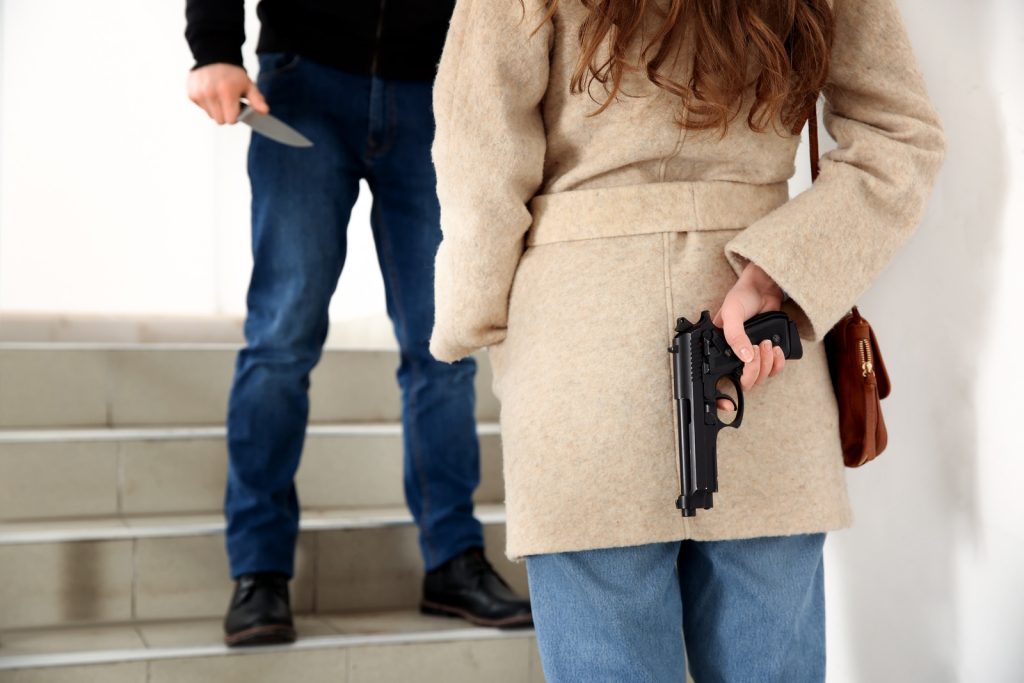
Ask most gun owners what makes someone truly prepared for a defensive situation, and they’ll talk about marksmanship. Accuracy, draw speed, weapon handling — these are the skills that get the most attention, the most range time, and the most conversation.
They matter. But there’s a skill that precedes all of them in any real defensive encounter — one that determines whether any of those other abilities ever get used at all.
That skill is situational awareness. And for anyone serious about protecting their family, understanding what it is, how it works, and how it’s developed is just as important as anything you’ll ever learn on the range.
What Situational Awareness Actually Means
Situational awareness is not a vague, instinctive sense that something is wrong. It’s a trained, disciplined practice of observing your environment, processing what you’re seeing, and staying far enough ahead of unfolding events to make decisions before circumstances force your hand.
In a defensive context, it’s the difference between recognizing a threat while you still have options — and recognizing it only when those options have already been eliminated.
The person who notices the unfamiliar vehicle outside their home, the door that wasn’t left that way, or the individual whose behavior doesn’t fit the environment they’re in — that person has time. Time to move their family. Time to create distance. Time to call for help. Time to prepare a response if one becomes necessary.
The person operating without that awareness doesn’t get those choices.
This is why Sword & Shield’s training philosophy is not built solely around what happens when a trigger gets pulled. It’s built around the complete picture of defensive readiness — and situational awareness sits at the front of that picture every time.
Awareness Is the First Line of Defense
Sal Broes — founder of Sword & Shield, U.S. Army veteran, DOD Agent, and active Executive Protection Specialist for celebrities and political figures — approaches defensive training from a perspective most civilian instructors simply cannot match.
Operating in executive protection at the highest levels means the goal is never to get into a fight. It’s to see the threat developing early enough that the fight never becomes necessary.
That mindset translates directly into the home defense training Sword & Shield delivers to civilians across North Georgia. The most defensively capable person in any situation is not necessarily the best shooter in the room. It’s the person who saw the situation developing before everyone else and had already begun positioning themselves, their family, and their options accordingly.
Every training program at Sword & Shield incorporates this principle — whether students are working through the Range Day home defense course, participating in a home security assessment, or developing skills in a private one-on-one session. The tactical mindset that underpins genuine defensive readiness — the ability to observe, assess, and act before a situation becomes critical — is woven into every element of the instruction.
Your Home Is an Environment You Should Know Completely
Situational awareness at home starts with an honest understanding of your property’s specific vulnerabilities and entry points.
Most homeowners have a general familiarity with their own space — but familiarity and tactical awareness are not the same thing. Knowing where your doors and windows are is different from understanding which of them represents the most likely point of entry for an intruder, which areas of your property provide concealment for someone approaching, and where the blind spots in your perimeter lighting actually are.
Sword & Shield’s home security assessment addresses exactly this gap. In a thorough on-site evaluation, Sal examines your property the way a trained security professional would — from the outside in, with the same analytical mindset a threat would use. The findings are specific to your address, your layout, and the particular vulnerabilities your home presents.
Understanding those vulnerabilities is the foundation of home-based situational awareness. You cannot stay ahead of a threat in a space you haven’t fully assessed.
The assessment also walks families through scenario-based planning — what-if walk-throughs that build the mental framework for recognizing and responding to threats before they fully materialize. The more clearly you’ve already thought through how a situation might unfold, the faster and more effectively you can respond when something begins to match that pattern.
Stress Exposure Is How Awareness Gets Trained
Situational awareness cannot be built through passive learning alone. Reading about it and agreeing that it matters does not produce the kind of automatic, reliable awareness that functions under the stress of a real defensive encounter.
That level of awareness is trained — and specifically trained by putting yourself into controlled high-pressure situations where your observation and decision-making are tested.
This is a defining feature of the Range Day program at Sword & Shield. Students don’t simply fire at stationary targets in comfortable conditions. They move through stress-fire scenarios and engage live targets using simulation guns — experiencing firsthand how adrenaline compresses decision-making, narrows focus, and challenges the clear environmental observation that situational awareness depends on.
Walking through that experience in a structured, safe environment is what begins to build the capacity to maintain awareness when the pressure is real.
The progression is deliberate. Each phase builds on the one before — gradually introducing more complexity, more movement, and more realistic pressure — so that students develop not just shooting skills but the tactical mindset to deploy those skills at the right moment, against the right threat, having seen it coming early enough to make clear decisions.
Low-Light Environments Demand Even More Awareness
Situational awareness becomes significantly more demanding in low-light conditions. When your ability to clearly observe your environment is reduced, every other element of your defensive response becomes harder. Threat identification, tactical positioning, and safe firearm handling all depend on accurate perception of what’s actually happening around you — and darkness makes that perception far less reliable without specific training to compensate.
Sword & Shield’s low-light shooting training addresses this directly. This specialized component teaches students to use a flashlight effectively in reduced visibility settings, identify threats in transitioning light environments, and maintain the situational awareness needed to make sound decisions when their eyes alone can’t give them the full picture.
For families whose home defense scenarios are most likely to unfold in the dark — which, realistically, describes most home intrusion situations — this training is not optional. It’s the difference between having defensive awareness and only having it when conditions happen to cooperate.
Children Can Develop Situational Awareness Too
Situational awareness is not exclusively an adult skill. Children who receive structured safety education develop the foundational habits of observation and response that contribute to their own safety — and to the overall awareness of the household.
Knowing what to do when something doesn’t feel right, recognizing situations that require an immediate response, and understanding who to tell and where to go are all components of situational awareness that children can absolutely be taught.
Sword & Shield’s children’s firearms safety training builds these habits through age-appropriate instruction that gives younger family members a clear framework for processing and responding to situations that feel unsafe. When children are included in that framework rather than left outside of it, the household’s overall situational awareness becomes a collective capability — not one person’s individual responsibility.
From Awareness to Action: How It All Connects
Situational awareness is not the end of defensive preparedness. It’s the beginning.
It’s what gives you the time and the information to make good decisions — decisions about whether to move, when to act, and how to deploy every other skill that training has built. Without it, even the best marksmanship arrives too late and without enough information to be effective. With it, your entire defensive capability becomes something you can actually access and deploy in the moments that matter.
Here’s how situational awareness connects to every element of Sword & Shield’s training:
Home Security Assessment — builds home-specific awareness by identifying the vulnerabilities and entry points you didn’t know you had.
Range Day Program — stress-fire scenarios and simulation training develop awareness under pressure, where it actually needs to function.
Low-Light Shooting Training — extends awareness into reduced visibility conditions where most real defensive situations unfold.
One-on-One Training — personalized instruction that develops a tactical mindset alongside individual mechanics.
Children’s Safety Training — builds age-appropriate observation and response habits that make younger family members part of the household’s awareness rather than a gap in it.
FAQ: Situational Awareness and Defensive Preparedness
Is situational awareness something that can be trained, or is it a natural ability?
It’s entirely trainable. Sword & Shield builds it into every program through stress-fire scenarios, movement drills, and scenario-based planning that develop observation and response before situations become unmanageable.
How does the home security assessment help develop situational awareness?
Sal evaluates your property from the outside in — identifying blind spots, vulnerable entry points, and concealment areas — then builds scenario walk-throughs that create a mental framework for recognizing threats early.
Why is low-light training important for situational awareness?
Darkness severely limits observation and threat identification. The low-light program teaches students to compensate through flashlight technique and threat identification in reduced visibility conditions that reflect most real home defense scenarios.
Can children develop situational awareness through Sword & Shield’s training?
Yes. The children’s program builds age-appropriate observation and response habits that make them an active part of the household’s overall safety awareness.
How do I get started? Call (678) 936-4403 or schedule online. Available Monday through Saturday, 9AM to 5PM.
Build the Awareness That Makes Everything Else Work
Building situational awareness is a practice — and it’s one that Sword & Shield develops in every student across every program it offers. Whether you’re just beginning your defensive training journey or looking to sharpen skills you’ve already developed, the tactical mindset at the core of genuine situational awareness is built through the kind of structured, real-world, stress-tested instruction Sword & Shield delivers every day.
Sword & Shield serves residents across Cumming, Dawsonville, Gainesville, Cherokee County, Gwinnett County, Cobb County, Alpharetta, Milton, Roswell, Johns Creek, and Suwanee — Monday through Saturday, 9AM to 5PM.
👉 Schedule your training session — or call (678) 936-4403 to talk through the right program for where you are right now.
Also explore Sal’s background, the full range of training programs, and service areas across North Georgia.